Thursday, June 19, 2008

Salmonflies on the way

Yesterday my friend Ryan and I headed out to see if we could find some salmonflies on the Lower Madison. The word was that they were starting to creep up on the banks, so we figured it was worth a shot. Ryan recently had reconstructive surgery on his foot, so he was excited to get out and fish for the first time this spring, and I was excited as well...because that's just generally how I am when it gets nice in Montana.


Nice doesn't even really begin to describe yesterday's weather. Our winter was long, cold, and snowy, the way a Montana winter should be. Our spring has been wet, rainy, and cool, the way a Montana winter should be. I've only been here for about 7 years, but the scenery around here is the most beautiful I've ever seen it. The meadows are lush, green, and full of wildflowers...and the rivers are full, fat, and happy. Full, fat, happy rivers make for some full, fat, and happy trout, and in turn some full, fat, and happy anglers in Southwest Montana.


Basically... it's shaping up to be an amazing summer. The folks that have lived here for many years are saying that this is what it used to be like every year, before the drought started about 8 or so years ago. And as we approach the first official day of summer, we know that salmonflies are on the way. I've chased this hatch pretty much every year I've lived here, mostly unsuccessfully. With a 9-5 job, it can be tough to catch a hatch right on the money, because for some strange reason those big, ugly bugs just won't wait for the weekend to splat into the water to be fodder for hungry browns and rainbows.

Soon after putting in, around 4:00 pm or so (4:00 pm is more my style than 4:00 am...see the previous entry) I was ready to chalk the day up as another swing-and-a-miss on the ole' Lower Maddy, since we didn't see any salmonflies and our standard stonefly nymph/worm combo weren't producing either.

Thankfully, Ryan had other ideas...including tying on a crayfish pattern. He picked up a decent rainbow on it pretty quickly, which was a good sign considering that in my experience the fishing tends to improve as you get further down river.

Some great conversation and a few browns followed...until he hooked into what he thought was a snag. But the snag quickly rolled...and immediately summoned a full-bodied "HOLY SH*T!!!" from myself. It then jumped about 3 feet out of the water, letting us know that it was indeed a brown trout, and a very nice one at that.

Ryan played the fish beautifully, and after what was probably 5 minutes but seemed like 15...we netted this guy...


No disrespect to Ryan, but the guy just doesn't know how to show off a fish. That's a BIG trout in his hands, but you might not know it from his posing style. I needed to teach him how to hold a trout for a picture. You know, the way smug guides do it. So we took one more picture to get a better view of the fish...which we measured to be 21 1/2 inches. I usually do a one-handed fish bragging pose, but since I've never caught a trout that big on a fly-rod, it was a new experience for me...and subsequently my lesson didn't go as well as I had hoped...


No matter how it's photographed, this is what we dream about all winter long in Montana when it's dark at five o'clock and we're flipping through HBO On-Demand. Not just the trout, but the opportunity to enjoy being outside in some of the most amazing surroundings with good people.
Thank you winter, you've given us a great gift this year! And thanks for letting me hold your big brown, Ry...hopefully it will bring me some trout mojo.

South Texas Speckled Trout


Early this month, I had a chance to fish with my cousin, Brant Pate, down in South Texas. In typical Capt. Pate, he had us out of bed at 4:30 to meet him at the put in. So with sleep in our eyes, and some haze in our brains from some killer margaritas the night before, Jessica and I headed over from Corpus Christi to Snoopy's Marina. Brant and our captain for the day, Scott, grabbed a tank load croaker and headed out at sunrise on a calm, beautiful Gulf morning. It had been rediculously windy for the several days prior to this outing, but luckily the day we decided to head out in the boat, mother nature co-operated.


Big Trout was the goal, as evidently the big ones are in close this time of year, doing their spawning thing. We used a pretty simple method...a croaker (baitfish) on a big hook...cast out, wait. Pretty relaxing way to fish, really, when you're used to two nymphs under splitshot in Montana winds.


The fishing started pretty slow, but about mid-morning our skipper found a good hole that produced a bunch of fish. Catch and Release doesn't really apply to trout in South Texas, and by the end of the day we had a cooler full of about 24 keeper trout...


We had a few fish at 23" inches or so, which were the biggest. It was a good time, and definitely nice to enjoy the Gulf heat knowing it was still snowing in Big Sky.


Thursday, May 15, 2008

New Stove from Jetboil


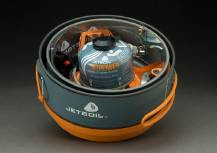
The folks at Jetboil have stepped up their game once again with the Jetboil Helios Cooking System. It will boil a liter of water in 3 minutes, enough to help feed the whole crew on a backpacking trip.


Helios is an all-in-one cooking system that covers the gamut, from melting snow to prepping robust meals for you and your crew. Helios lights quickly and reliably with the click of a button. The system burns liquid fuel, so you can use every last drop in your canister and every boil is consistent. Clip on the windscreen for a steady burn in 10 + mph winds.


This backpacking stove packs down nicely into it's bowl, which saves space and protects the stove from being dinged up on the trail.


Tuesday, May 06, 2008

Think Outside the Bottle

Here's an initiative that makes sense!

Bottled water corporations are changing the very way people think about water. Corporations like Coke, Nestlé and Pepsi are manufacturing demand for an essential resource that flows directly from our taps. What's more many bottled water brands actually come from the same source as public tap water though these brands are sold back to the public at thousands of times the cost.
Plastic bottles also require massive amounts of fossil fuels to manufacture and transport. Billions of these bottles wind up in landfills every year.
And when bottled water marketing convinces one in five people that the only place to get drinking water is from a bottle, it threatens the political will to adequately fund our public water systems.
You can help reverse this trend - take action today to support efforts to reduce the social and environmental impacts of bottled water and to prioritize public water systems!

From...thinkoutsidethebottle.org

For a water bottle that will last a lifetime...SIGG Water Bottles

Thursday, April 10, 2008

Old Man Winter Won't Give Up


We've had a few chances to fly-fish around here in Southwest Montana, but while most of the country is welcoming buds and birds, we're getting dumped on...again. I'm not complaining, I've resolved myself to be appreciative of every drop of moisture this planet gets at this stage of the game. However, it doesn't mean I'm not ready for some warm weather. It will be nice to toss a line without dealing with ice shelfs and insulated jackets. The lower Madison has been fishing pretty well. Here are a couple fish from a float we did last week....and a shot of what it looks like outside this morning.

Thursday, March 13, 2008

Boulder River

It's March in Montana...that means cabin fever, a few nice days to tease us into getting outside, and more winter weather to bring us back to reality. But a few nice days are better than none, so we took off last weekend for the Boulder River near Livingston, Montana. Last year around this time it was a little warmer, and the rainbows were hungry and fiesty when hooked. There was more ice on the river this time around, which I suppose is a good thing considering the drought we're in and the planet heating up in general. In any event, the fish were eating, although not with the voracity of last year. It still made for some great winter fly-fishing in Montana, and helped soothe the cabin fever if only for a few hours. Here are a few shots of the action on the Boulder.


Thursday, February 28, 2008

Sunday, February 24, 2008

Food for Thought

Eating plant-based meals conserves natural resources and slows global warming Looking for small ways to make a big difference for the environment? Why not start by making yourself a peanut butter and jelly sandwich?


As members of the PB&J Campaign (no, I’m not kidding) like to say, “You don’t have to change your whole diet to change the world. Just start with lunch.”


Eating a plant-based lunch (such as a peanut butter and jelly sandwich, a bean burrito, vegetarian chili, or a hearty salad) instead of an animal-based lunch (such as a hamburger, a tuna or grilled cheese sandwich, fish and chips, or chicken nuggets) will save water, preserve land and slow global warming.


How Eating a PB&J Sandwich Slows Global WarmingEvery time you eat a peanut butter and jelly sandwich or other plant-based meal instead of an animal-based lunch, such as a hamburger, you save the equivalent of almost 3.5 pounds of greenhouse gas emissions, including 2.5 pounds of carbon dioxide. That’s about 40 percent of the carbon you would save by driving a hybrid vehicle for the day instead of a standard sedan.


How Eating a PB&J Sandwich Saves WaterGrowing plants for food takes a lot less water than raising animals. As a result, every time you substitute a peanut butter and jelly sandwich or some other plant-based meal for an animal-based meal such as a hamburger, you save about 280 gallons of water. Eat three PB&J sandwiches a month instead of animal-based meals and you can save as much water as you would by switching to a low-flow showerhead.
How Eating a PB&J Sandwich Saves LandRaising animals for food takes a lot of space. For example, animal products require 6 to 17 times as much land as soy to produce the same amount of protein. Eating a plant-based lunch like a peanut butter and jelly sandwich instead of a hamburger, ham sandwich, or another animal-based meal saves anywhere from 12 to 50 square feet of land from deforestation, overgrazing, and pesticide and fertilizer pollution.
How Eating One PB&J Sandwich Helps the EnvironmentBy eating lower on the food chain—plants instead of animals—you also consume fewer resources. Why? Because, basically, everything you eat comes from plants. You either eat plants directly—in the form of fruits, vegetables and plant products such as peanut butter—or indirectly after animals have converted plants into meat, milk, eggs, butter and cheese.


The problem is that animals are not very efficient as living food factories that convert plants into food for humans. Animals use most of the plants they eat to produce the energy they need to walk around and keep breathing. To stay alive long enough to become part of your lunch or dinner menu, every cow, pig and chicken has to eat much more protein, carbohydrates and other nutrients than it will yield once the ax finally falls. As a result, it takes several pounds of plants to produce one pound of beef, pork, chicken, eggs or milk.
Inevitably, that means it also takes a lot more land, water and fuel to produce one pound of meat, milk or eggs than it does to produce one pound of edible plants. Not only do the animals need food, water and room to roam, but growing the plants to feed the animals that will, in turn, become food for you requires even more land and water as well as fuel for farm machinery and irrigation pumps.


To help provide some context, the PB&J Campaign says the water required to produce the beef in one hamburger could grow enough peanuts for 17 peanut butter and jelly sandwiches. And the land required to put that same beef patty on your bun could produce enough peanuts for 19 PB&J lunches.


How You and Your Diet Can Make a Difference


Basically, this all comes down to your power as a consumer. Every time you choose a hamburger, omelet or grilled cheese sandwich over a plant-based meal, you’re telling your local restaurants and supermarkets to buy more meat, eggs and dairy products. By choosing more plant-based meals, you’re asking for less meat and a more efficient use of resources. Either way, your unspoken but unmistakable messages are received by your local merchants and conveyed to wholesalers and farmers.


Want to do more? Share this information with your friends, coworkers and family members and urge them to take action. Urge your school or office cafeteria, or the local restaurants you frequent, to offer more plant-based dishes. Organize a weekly PB&J lunch (or other plant-based meals) at work, home or school and calculate the positive environmental contribution you’ve made.


From About.com: Can PB&J Save the World? http://environment.about.com/od/greenlivinginthekitchen/a/peanut_butter.htm

Aquapac on Track


Aquapac has always been committed to making as little negative impact on the environment as possible. This year they have taken this commitment further, starting March 1, 2008 all Aquapac waterproof cases will be made from Polyurethane (PU), a material which is 100% PVC Free, better for the environment and also a better fit for the purpose of Aquapac waterproof cases.

Below are just a few benefits of the new material:


  • 100% Recyclable - it can be broken down and made into something else at the end of a product’s life.

  • 100% PVC Free - less damaging to the environment.

  • Less sensitive to extreme climates than PVC - can withstand temperatures of 122°F (+50°C) to -40 °F (-40°C)

  • Suitable for use in all weather conditions, particularly useful for winter activities and snow sports

  • Thinner than PVC which makes it easier to operate controls through the case – still as durable as PVC.

  • Our work won’t stop here, we will continue to look for ways to further reduce our impact on the world’s natural resources while not compromising on the quality and functionality of Aquapac products.

Wednesday, February 13, 2008

Powderfin.com Photo Contest Winners....

3rd Place - Paul S. in the Ukraine

2nd Place - Katherine F.

Rockin' Powderfin in Bora Bora

Prize: Joby Gorillapod Digital Camera Tripod

And in 1st Place...

Ashley S.

Price: $50.00 Powderfin.com Gift Certificate

A candid shot of the PFin. Twins in the oven and the pants still unbuckled? Wow. We love it!

Thanks to all who sent in photos!


Monday, February 11, 2008

Armstrong Spring Creek 2-10-2008


We celebrated a bit after this amazing Sunday...
steaks and beers at Sir Scott's Oasis, Manhattan, MT.


Tuesday, January 29, 2008

Crescent Moon Snowshoes Goes Green

Crescent Moon Snowshoes celebrated its 10th year in business in the year 2007 as a US based manufacturing company that makes all of its snowshoes in Boulder, CO. The company has been recognized as one of the elite snowshoe producers in the world with an innovative design for its bindings and unique “tear-drop” shaped frames. And for the last 2 years, Crescent Moon has made a concerted effort to reduce their impact on the environment while increasing the quality and performance of our snowshoes. At Powderfin.com, this is the kind of company that we believe in. Despite competitive pressures which can often lead companies toward lower cost, lower quality production methods, Crescent Moon is bucking the system. They're willing to pay more for materials and labor in order to offer their customers a better snowshoe, made from better materials, right here at home!

To further distinguish the company from the competition, Crescent Moon snowshoes are now made with materials that contain NO PVC (polyvinyl chloride), which is a significant step in reducing the company’s environmental impact. This policy is complimentary to their operational process of using 100% wind powered energy in their factory and office and recycling nearly everything they use, including aluminum, stainless steel, cardboard, and office materials. The company intends to pursue its ultimate goal of being “as GREEN as possible” using aluminum, steel, and other recyclable materials in the construction and design of its snowshoes for the future. Tamara Laug, co-owner and principal proponent of the company’s GREEN theme has been a recycler for most of her life and is the driving force behind the company’s transition to being an earth friendly manufacturer. “It’s philosophically inconsistent to be an outdoor’s product manufacturer and not be considerate of the environment in which our products are being used – the great outdoors”, she said. “We’ve been making this transition for a number of years but recently found alternatives to the decking materials we’ve been using (and our competition continues to use) that allows us to make this significant step towards being GREEN. Currently, we can claim to be the first and only snowshoe manufacturer in the world to do so."


The materials used for the 2007/2008 Crescent Moon Snowshoe line are PVC free, yet have greater strength and less weight per linear yard than the materials they replace. Although more costly than the PVC materials used in the past, Crescent Moon is willing to pay the premium for environmentally responsible alternatives. PVC is a relatively inexpensive material, but the cost to the environment is very significant. According to some sources, "PVC (polyvinyl chloride) plastic, commonly referred to as vinyl, is one of the most hazardous consumer products ever created. PVC is dangerous to human health and the environment throughout its entire life cycle, at the factory, in our homes, and in the trash. Our bodies are contaminated with poisonous chemicals released during the PVC lifecycle, such as mercury, dioxins, and phtlates, which may pose irreversible life-long health threats. When produced or burned, PVC plastic releases dioxins, a group of the most potent synthetic chemicals ever tested, which can cause cancer and harm the immune and reproductive systems."

Crescent Moon Snowshoes has distribution of its products in Europe, Japan, and Australia and of course, much of the US market through places Powderfin.com, REI, and EMS. Company president Jake Thamm said “by offering a GREEN snowshoe which is made entirely in the US we feel we can offer the market a line of products that not only perform better than most other snowshoes, but will give our customers something good to feel about when they buy and use them in the outdoors.”

We hope other company’s adopt these same measures and together we can begin to reverse global warming, landfill expansion, and environmental pollution and waste. To read product reviews and recognitions, visit the Crescent Moon press page.

Passage Creek XC Ski


A couple of weeks ago it was warm enough to get out and play a bit. Over in Paradise Valley, a little bit up the Yellowstone from Livingston is a trail called Passage Creek. It heads up to a falls about 4.5 miles in, so it seemed like the perfect day trip on the ol' XC set up. We never made it to the falls due to running out of daylight, but made it up about 1 mile shy. The trail meandered along a road, then a creek for a few miles before heading into a recent burn area. It was definitely still a pretty spot, as there was a bunch of fresh snow and some nice views. 7 1/2 or so miles was a good distance, my feet were ready for some Sorel's and a soak after that one.


Thursday, January 17, 2008

Ground Extension Shell - eVent


Today Powderfin.com launched a new waterproof breathable jacket from our friends at Ground. "The Extension Shell" is top-dog in the winter outerwear game. Designed for high output activity in colder weather, the Extension features eVENT fabric, the best waterproof breathable shell material available on the market today.


Material


eVent 3-Layer Ultra-Light Mini Box Ripstop: eVENT 3-layer actively vents perspiration vapor through millions of microscopic clog-resistant pores. eVENT Fabric is a Direct Venting waterproof barrier that marks a significant advancement in ePTFE laminate technology. Using proprietary and patented Dry System technology, eVENT Fabric sets a new standard for comfort by allowing perspiration to dissipate and vent without saturating the inside of the fabric

Ground Extension Shell Technical Features


eVENT®—Provides DRY INSIDE™ comfort
Waterproof/breathable hybrid shell
Incorporates sew-free construction
Hard shell in high wear - high stress areas
Stretch softshell panels at side body - under arms
Fully seam taped
Zip off helmet compatible hood
Brushed chin guard Bottom hem draw cord
Micro venting pit zips
Harness - pack compatible hand pockets
Pockets and pit zips feature YKK waterproof zippers
Removable elbow and shoulder pads
One-handed pull-cord hem construction
Women�s style specifi cally engineered for women

Wednesday, November 21, 2007

Peak Freaks - Himalayan Mountain Guides


PEAK FREAK EXPEDITIONS INC. Is a owner/operated 8000m Mountaineering and Trekking Company ran by Canadian Guide Operators Tim and Becky Rippel. Veteran's of six Mount Everest Expeditions from both the North and the South side and annual climbs on Mt. Ama Dablam and Mt. Pumori and base camp treks.Tim and Becky are very well known for their close connection with the Sherpa people. They are a small scale Himalayan Expedition Operator with big success.


Peak Freak's, a distinctive addition to the Nepalese world of treks and climbing expeditions. With over 16 years experience and 27 Himalayan expeditions introducing Nepal as their mountaineering destination, exploring old time-tested trails in more ways than one and developing lasting relationships between their guests and Sherpa families of friends is what the company claims to be adept at. Their clientele varies from the individual traveler to small groups of expedition base camp support trekkers, including associations, researchers and educational trips. The company has by far managed to generate a steadily increasing clientele from all over the world. Becky a 25 year International Group Travel specialists and Tim a 25 year Mountain Guide together working in Nepal since 1991. To learn more read their bios below.
Peak Freak Expeditions Inc. has a wide assortment of optional tour itineraries to enjoy while in Nepal that take visitors to areas including the Khumbu (iEverest Region), Chitwan Jungle Elephant Safaris, Wild Himalayan Rivers, Bungee Jumping, Ballooning, Tibet Overland Tours and Tibet Mountain Biking and Thailand. Some of their Canadian adventures include and adrenaline outdoor trips in Canada's Backcountry. Programs include: Heli Skiing Nelson, B.C., Chalet Rental at Whitewater Ski Area, Ski Tours, Mountain Safety Courses.

Powderfin logo photos....


At home in Bozeman, Montana

And abroad in the Ukraine...
Thanks for the submissions, keep em' coming!


Monday, November 19, 2007

Solio Solar Charger Video

The Solio Solar Charger is a hot item this season...enjoy your mobile devices and feel good about being green!

Tuesday, November 06, 2007

"Show Us Your Fin" Entries....

Powderfin in Bora Bora! Mt. Otemanu


Winter's on the way!